Japan breaks with post-World War II pacifism by relaxing arms export regulations.
News Mania Desk/ Piyal Chatterjee/21st April 2026

Japan is now able to sell weapons to over a dozen nations after easing decades-old limits on its arms exports. Tokyo’s move away from the pacifism that has defined its post-war defense strategy has reached a significant milestone with the declaration on Tuesday. Additionally, tensions in the area are at an all-time high.
The five categories of weaponry exports—rescue, transport, warning, surveillance, and minesweeping—will no longer be restricted. As a result, Japan can now sell deadly weapons to the 17 nations it has defense agreements with, including the United States and the United Kingdom. The prohibition on selling weapons to nations engaged in hostilities will remain in place, but it does not apply to nations that have defense agreements with Japan.
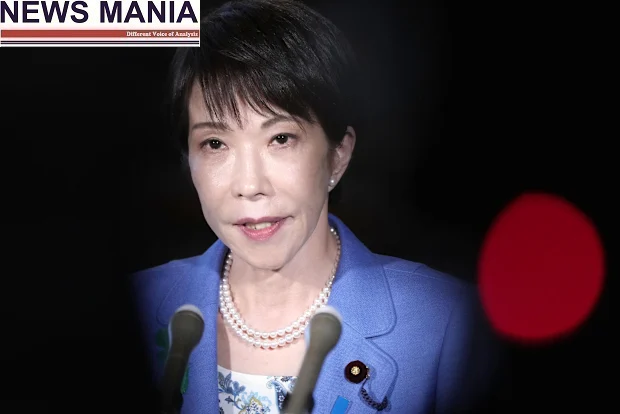
“In an increasingly severe security environment, no single country can now protect its own peace and security alone,” Japanese Prime Minister Sanae Takaichi wrote on X on Tuesday.
However, she also said there was “absolutely no change in our commitment to upholding the path and fundamental principles we have followed as a peace-loving nation for over 80 years since the war”.
“Under the new system, we will strategically promote equipment transfers while making even more rigorous and cautious judgments on whether transfers are permissible,” she wrote.
In a news briefing, Chief Cabinet Secretary Minoru Kihara stated that the action was “designed to defend Japan’s security and further contribute to the peace and stability of the region”.
China has stated that it is “extremely concerned” about Japan’s “reckless militarization.” As Japan’s Self-Defense Forces participated in yearly war drills between the United States and the Philippines, the new arms export regulations were made public. For the first time, Japan is participating in the war games as soldiers rather than just spectators.
China has objected to the exercises, saying they will widen regional rifts. The drills are conducted in areas of the Philippines that are close to Beijing-claimed islands and waterways, including Taiwan. China has not ruled out using force to seize Taiwan, which it views as a wayward province that would inevitably fall under Beijing’s authority.
Takaichi’s suggestion in parliament last year that Japan could use its Self-Defense Force in retaliation if Beijing attacked Taiwan infuriated Beijing.
Japan’s defense strategy “should ideally be carried out in a manner that maintains the spirit of the Peace Constitution while contributing to peace and stability in the area,” according to South Korea’s foreign ministry. From 1910 until the end of World War II, Japan colonized South Korea. Hundreds of thousands of Koreans were compelled to labor in its factories and mines by Japanese forces. Sexual servitude was forced upon women.
In 1947, Japan’s post-World War II constitution included provisions pertaining to its defense posture. It said that Japan would never retain the capacity to wage war and rejected using force to resolve international conflicts. Japan has been associated with pacifism for many years. However, that way of thinking has been progressively changing.
Shinzo Abe, the prime minister at the time, loosened a general ban on all military sales in 2014, enabling cooperative armament development with allies and opening up new markets and technological opportunities for the defense sector.
For the first time since World War Two, then-prime minister Fumio Kishida went one step farther and permitted the export of completed lethal weapons in 2023. Takaichi is in favor of amending the pacifist constitution. Although she hasn’t detailed the proposed revisions, many believe they will entail changing Article 9, which forbids war. Supporters of Takaichi contend that Japan must accept the fact that it is surrounded by China, Russia, and North Korea and that the old laws no longer apply.
However, detractors fear that Japan is becoming into a nation capable of waging war. They believed that Takaichi’s position on constitutional reform might lead to Japan becoming embroiled in hostilities.