
Pahalgam’s Baisaran faces damaged lives and deserted pathways a year after the attack.
News Mania Desk/ Piyal Chatterjee/22nd April 2026

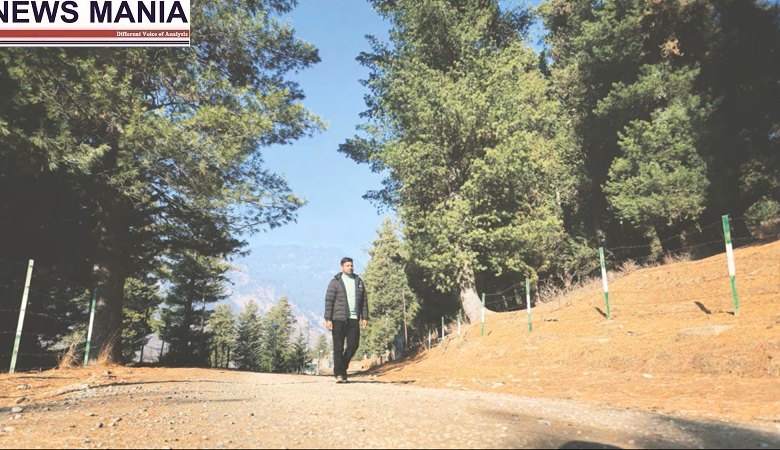
The renowned Baisaran meadow, sometimes referred to as “Mini Switzerland,” is still closed a year after the horrific terrorist assault in Pahalgam that killed 26 people. While local vendors and pony riders wait for life to return to normal, the once-lush expanse now reverberates with silence rather than the buzz of tourists.
The region’s tourism-dependent community is in protracted pain due to the ongoing closure of Baisaran, even if some areas of Pahalgam are cautiously witnessing a stream of visitors. Baisaran was more than simply a tourist destination for the approximately 5,000–6,000 pony operators in Pahalgam. It served as the foundation for their way of life. Entire families were supported by the picturesque uphill walk to the meadow, which was sometimes done on horseback. That lifeline is no longer there today.
“We have been in this business for 30 years. Never have we seen such a collapse,” said a ponywallah at the stand. “Earlier, we would make multiple trips a day. Now, even one ride is rare.”
Many say the past year has been about survival, not income. With no alternative livelihoods and minimal support, families have been pushed to the brink.
“Our homes no longer function the way they used to. Everything stopped after the attack,” another handler said.
The once-familiar sounds of hoofbeats and tourist chatter have given way to an uneasy silence and lingering uncertainty.
The pony stands are just one aspect of the situation.
The Pahalgam Hotel and Restaurant Owners Association president, Javed Burza, claims that the tourism industry is only functioning at 30 to 40 percent occupancy, with many businesses finding it difficult to break even.
“Even when tourists come, they don’t stay overnight,” Burza said. “They arrive in the morning and leave by evening. Night occupancy has dropped sharply, and that’s where the real revenue lies.”
Hotels that once saw full bookings during the peak spring season are now grappling with empty rooms. Restaurants report sharply reduced footfall, while many smaller establishments have either shut down or are barely surviving.
“Some properties have gone under. Others remained open but saw zero occupancy for months,” he added.
In Pahalgam’s markets, shopkeepers selling shawls, handicrafts and essentials, once buoyed by tourist spending, now sit idle for hours.
“Tourism is our backbone. When it stops, everything stops,” said a local merchant. “Even those who invested recently are struggling. Many young people who found jobs in hotels or shops are now unemployed.”
The ripple effect is visible across sectors, taxi operators, guides and vendors all looking at steep losses.
According to Pahalgam stakeholders, rebuilding visitor confidence is more difficult than simply reopening venues. Although security has been strengthened, many people think that safety and accessibility still need to be balanced. Longer stays are further discouraged by the closure or partial restriction of some tourist destinations, such as Baisaran.
Industry participants contend that extended closures send a bad message and have called on authorities to restore important locations with strong security measures.
For Pahalgam, spring is usually the busiest time of year. However, it hasn’t delivered this year. In the past, April and May meant crowded hotels, busy marketplaces, and never-ending pony trips to Baisaran. Even in the middle of the day, the town seems muted. There is optimism and resiliency in spite of the difficulties. In order to restore confidence, stakeholders are demanding the reopening of Baisaran and other popular tourist destinations, more robust national safety messaging, and ongoing marketing initiatives.