Scientists Reassess How Mars Lost Its Warm Climate and Atmosphere
News Mania Desk/ Piyal Chatterjee/ 9th June 2026

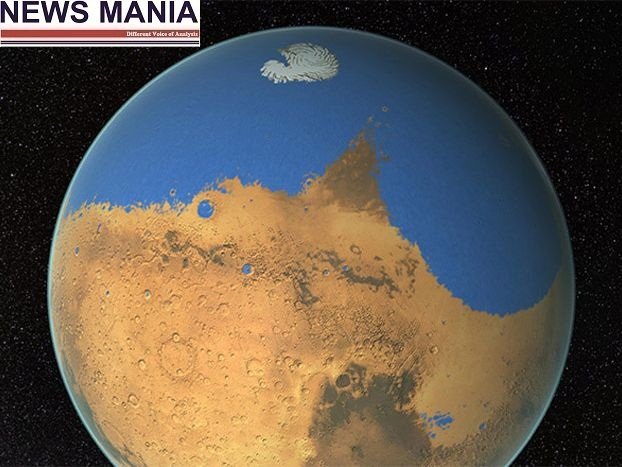
Mars, now known as a cold and barren world, may have undergone a far more complex transformation than previously believed, according to recent scientific findings that are reshaping understanding of the Red Planet’s ancient past.
Researchers have long maintained that Mars was once a warmer and wetter planet, featuring rivers, lakes, and a much thicker atmosphere capable of supporting liquid water on its surface. Geological evidence, including dried river channels, lakebeds, mineral deposits, and sedimentary formations, continues to support the theory that water flowed extensively across the planet billions of years ago.
A key explanation for Mars’ dramatic climate shift has been the disappearance of its global magnetic field. Scientists believe the planet once generated a magnetic shield through a molten core dynamo, similar to Earth’s. When this dynamo ceased functioning, Mars became increasingly exposed to the solar wind, which gradually stripped away much of its atmosphere.
However, researchers now argue that the process may not have been as straightforward as once thought. While data collected by NASA’s MAVEN mission confirms that atmospheric gases continue to escape into space and that solar storms accelerate this loss, scientists remain divided over the exact role played by the vanished magnetic field.
Adding to the debate is the example of Venus, which lacks a global magnetic field yet retains a dense atmosphere. This suggests that additional factors may influence a planet’s ability to preserve its atmospheric gases over billions of years.
Recent discoveries have also revealed that not all of Mars’ lost atmosphere escaped into space. Some of the carbon dioxide that once contributed to a thicker atmosphere appears to have been locked away in carbonate-rich rocks within the planet’s crust.
As scientists continue to investigate the Red Planet’s history, questions remain about how much atmosphere was lost to space, how much became trapped underground, and whether Mars was once consistently warm or only experienced intermittent periods capable of sustaining liquid water.