Supreme Court Says Female Genital Mutilation Cannot Be Compared to Circumcision During Sabarimala Reference Hearing
News Mania Desks/ Piyal Chatterjee/ 7th May 2026

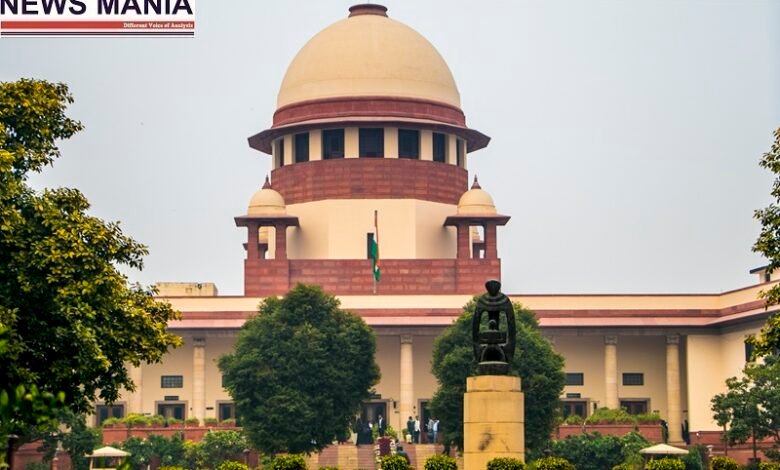
The Supreme Court of India on Thursday made significant oral observations against the practice of female genital mutilation (FGM), stating that it affects women’s physical and reproductive health and cannot be equated with male circumcision.
The remarks were made during hearings before a nine-judge Constitution Bench examining issues connected to religious freedoms and essential religious practices under Articles 25 and 26 of the Constitution. Petitions challenging FGM within sections of the Dawoodi Bohra community are being heard alongside matters linked to the Sabarimala Temple entry dispute reference case because both involve broader constitutional questions concerning religion, bodily autonomy and fundamental rights.
Senior advocate Siddharth Luthra, appearing for petitioners opposing the practice, argued that FGM is carried out on young girls, often without informed consent, and causes irreversible physical and psychological harm. He submitted before the court that the procedure adversely impacts sexual and reproductive health and violates the bodily integrity of minors.
Luthra further argued that social pressure within the community compels many families to continue the practice despite awareness about its harmful consequences. He described the procedure as a form of mutilation involving a sensitive female organ and said the court must examine whether such practices can receive constitutional protection under the right to religious freedom.
During the hearing, Justice Joymalya Bagchi observed that the Constitution itself permits restrictions on religious practices if they adversely affect public health. The judge remarked that female genital mutilation directly impacts physical, reproductive and emotional health, making the issue one of constitutional concern rather than merely religious freedom.
Justice Bagchi also noted that the practice affects a woman’s sexual autonomy, while Justice B. V. Nagarathna observed that constitutional morality could also become relevant while evaluating such practices under Article 25.
The proceedings witnessed a sharp exchange after advocate Nizam Pasha, representing the opposing side, argued that the practice should not be termed mutilation and attempted to compare it with circumcision among men. He claimed the procedure was closer to “hoodectomy,” which he said is performed in certain countries.
However, members of the bench strongly rejected the comparison. Justice Bagchi stated that circumcision and female genital mutilation are fundamentally different from a public health perspective. Justice Ahsanuddin Amanullah also remarked that the factual and medical aspects of the two procedures were entirely different.
The Constitution Bench further questioned whether practices affecting bodily integrity and health can qualify as essential religious practices deserving constitutional protection, especially when minors incapable of informed consent are involved. Chief Justice Surya Kant asked whether courts are obligated to intervene when religious customs conflict with other fundamental rights guaranteed by the Constitution.