West Bengal borrowers show strong shift toward formal credit and enterprise-led borrowing: MFIN–NCAER Study
30th April 2026

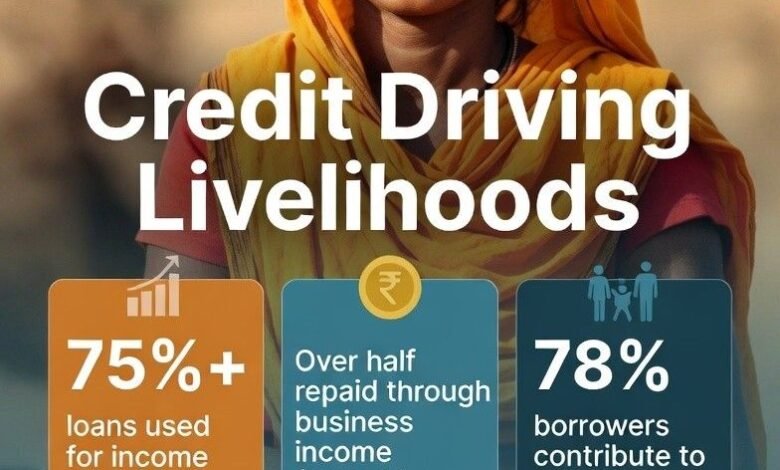
Kolkata: West Bengal emerges as an important microfinance market in the NCAER study prepared for MFIN, with borrowers showing a clear shift toward formal credit and productive use of loans. The report highlights that regulated microfinance continues to support small businesses, livelihood activity and household financial resilience across the state.
The study shows that 78.0% of borrowers in West Bengal contribute to household income, reflecting the active economic role of women borrowers and their families. The average annual household income in the state stands at Rs 3.14 lakh , while borrowers report steady savings behaviour and strong engagement with formal financial systems. These trends reinforce the role of microfinance as a practical inclusion tool for low-income households.
Borrowers in West Bengal are using microfinance largely for productive purposes such as existing business, new enterprise and farm-linked activity. Among the surveyed states, West Bengal, at 46%, has the highest share of borrowers involved in petty trade and business . This points to a credit ecosystem that is increasingly tied to livelihoods rather than consumption alone. The state also has a monthly per capita consumption expenditure on non-food items higher than the country average. The report also notes that borrowers prefer regulated lenders for their accessibility, simplicity and support in managing household cash flows.
Overall, West Bengal stands out as a state where regulated small borrowing is helping households strengthen income, savings discipline and financial stability while reducing dependence on informal credit sources.
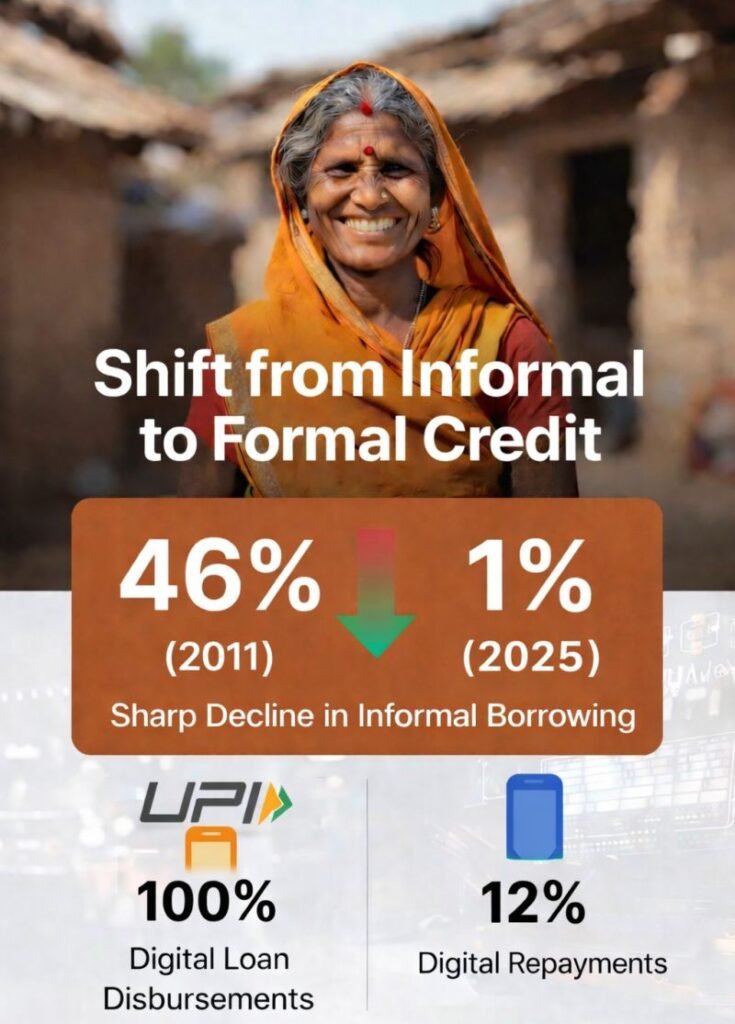
Dr. Alok Misra, CEO & Director, MFIN, said: “The key takeaway from this study is the clear shift towards formal credit, with a sharp decline in reliance on informal sources and improved borrower outcomes. At the same time, there is a need to further strengthen credit assessment, particularly around household cash flows, to mitigate risks of over-indebtedness. The positive trends in borrower engagement, savings behaviour and productive use of loans reinforce the sector’s role in supporting livelihoods. Going forward, continued focus on financial awareness, responsible lending and digital adoption will be critical to deepen financial inclusion.”
Dr. V Anantha Nageswaran, Chief Economic Advisor, Govt. of India remarked “The findings of this NCAER-MFIN study covering over 10,000 borrowers across 10 states give us every reason to feel encouraged and every reason to be ambitious. Microfinance institutions today have a strong relationship of trust with millions of borrowers. This creates an opportunity to go beyond credit by strengthening financial literacy, improving awareness and supporting income enhancement through skilling and other interventions. Leveraging this engagement effectively can play an important role in advancing sustainable livelihoods and improving household resilience.”