Tarique Rahman, the new prime minister of Bangladesh, was sworn into office.
News Mania Desk /Piyal Chatterjee/ 17th February 2026
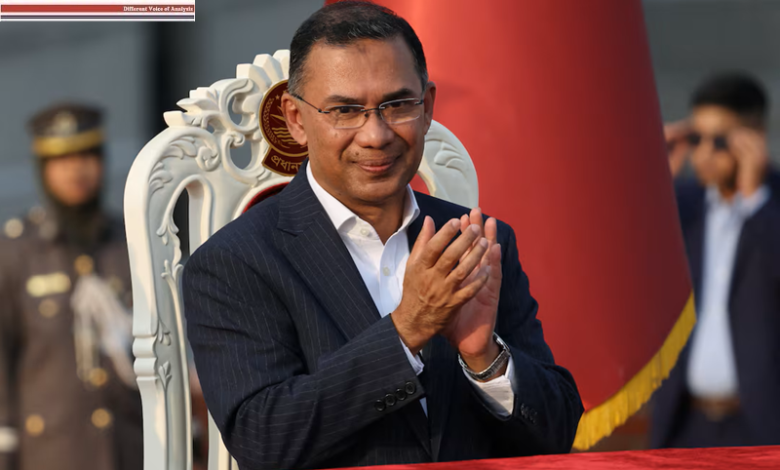
On Tuesday, Tarique Rahman, the country’s new prime minister, and other elected officials were sworn into parliament, marking the country’s first elected officials since a bloody rebellion in 2024.
With the fall of Sheikh Hasina’s dictatorial administration 18 months ago, Rahman will succeed an interim government that has ruled the 170 million-person nation.
A M M Nasir Uddin, the chief election commissioner, swore in the legislators, who pledged allegiance to Bangladesh.Rahman was supposed to be legally elected as the head of the Bangladesh Nationalist Party (BNP), and later on Tuesday afternoon, Mohammed Shahabuddin, the president, was supposed to take the oath of office from the prime minister and his ministers.
Rahman, 60, the head of the BNP and the heir to one of the most influential political families in the nation, won the elections on February 12 with a resounding victory.
“This victory belongs to Bangladesh, belongs to democracy,” he said in his victory speech on Saturday. “This victory belongs to people who aspire to and have sacrificed for democracy.”
But he has also spoke of the challenges ahead, including tackling the economic woes of the country.
“We are about to begin our journey in a situation marked by a fragile economy left behind by the authoritarian regime, weakened constitutional and statutory institutions, and a deteriorating law and order situation”, he added.
The new leader has pledged to restore stability and revive growth after months of turmoil that rattled investor confidence in Bangladesh, the world’s second-largest garment exporter.He has also called for all parties to “remain united” in a country polarised by years of bitter rivalry.
Rahman only returned to Bangladesh in December after 17 years in exile in Britain. The BNP coalition won 212 seats, compared with 77 for the Jamaat-e-Islami-led alliance.
Jamaat, which secured more than a quarter of seats in parliament – a four-fold increase on its previous best – have challenged results in 32 constituencies. But its leader, Shafiqur Rahman, 67, has also said the Islamist party would “serve as a vigilant, principled, and peaceful opposition”The Awami League party, led by Hasina, was not permitted to participate in the elections.
From hiding in India, Hasina, 78, who was found guilty of crimes against humanity and given a death sentence in absentia, released a statement denouncing a “illegal” election.
However, India applauded the BNP’s “decisive win,” which was a significant change following extremely tense relations. Although an additional 50 seats designated for women will be distributed to parties based on their vote share, only seven women were elected directly. Two Hindus, who make up about 7% of the population in Bangladesh, which has a majority of Muslims, were among the four members of minority communities who were elected to office.