Raghav Chadha, AAP MPs Defect to BJP in Major Political Realignment
News Mania Desk/ Piyal Chatterjee/24th April 2026

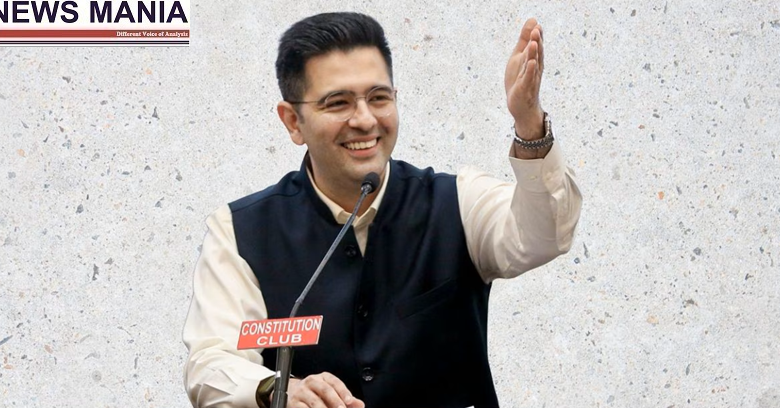
In a dramatic political development, Raghav Chadha, a prominent Rajya Sabha member of the Aam Aadmi Party (AAP), along with several party colleagues, has announced a shift to the Bharatiya Janata Party (BJP). The move marks one of the most significant internal ruptures within AAP since its inception and is expected to have far-reaching consequences for parliamentary politics.
According to Chadha, nearly two-thirds of AAP’s representatives in the Rajya Sabha have decided to merge with the BJP, describing the decision as a collective and carefully considered step rather than an individual defection. The announcement signals a substantial erosion of AAP’s strength in the Upper House, where the party had built a modest but influential presence in recent years.
Explaining the rationale behind the shift, Chadha alleged that AAP had strayed from its founding ideals of transparency, accountability, and clean governance. He claimed the party’s functioning had increasingly diverged from its original mission, suggesting that internal priorities had shifted toward narrow interests rather than broader national concerns. In his remarks, Chadha portrayed himself and his colleagues as being ideologically misaligned with the party’s current direction, indicating that their move was driven by principle rather than political expediency.
The development comes amid reports of growing internal discord within AAP. Tensions over leadership decisions, strategic direction, and organisational control have reportedly been building for some time. Chadha’s distancing from key party roles in recent months had already fueled speculation about a possible fallout, which now appears to have culminated in a formal split.
For the BJP, the induction of multiple AAP MPs is likely to bolster its numerical strength in the Rajya Sabha, potentially easing the passage of legislation. The move also reinforces the ruling party’s broader strategy of expanding its footprint by attracting leaders from opposition ranks. Political observers note that such defections can alter legislative dynamics, particularly in a chamber where numbers often determine the fate of key bills.
On the other hand, the setback for AAP is considerable. The party, which emerged as a major political force on the back of anti-corruption activism, now faces questions about internal cohesion and leadership stability. The loss of a significant portion of its parliamentary contingent could weaken its voice at the national level and complicate its efforts to position itself as a credible alternative to established parties.
The episode also raises questions about the implications under India’s anti-defection framework, though the scale of the shift—if it meets the required threshold—may allow the breakaway group to avoid disqualification by being treated as a merger.
As the political fallout continues to unfold, this development underscores the fluid nature of party alignments in Indian politics and highlights the challenges faced by relatively newer political formations in maintaining unity amid evolving ambitions and pressures.