Supreme Court Says OBC Creamy Layer Cannot Be Determined by Income Alone
News Mania Desk/ Piyal Chatterjee/ 12th March 2026

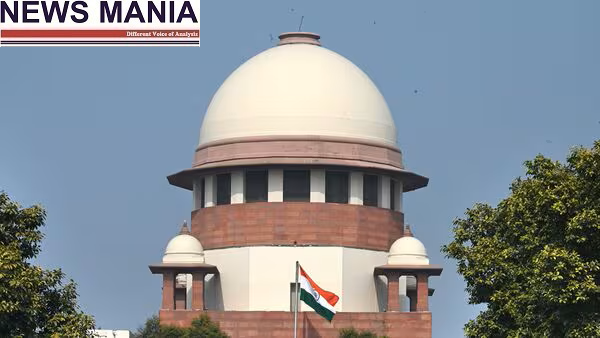
The Supreme Court of India has ruled that identifying whether a person belongs to the “creamy layer” within the Other Backward Classes (OBC) category cannot be based solely on income. The court observed that relying only on financial criteria to decide eligibility for reservation benefits is legally unsustainable and fails to reflect the broader objective of affirmative action policies.
The ruling came while the court was examining a case involving the classification of candidates under the OBC category and whether they should be excluded from reservation benefits due to their economic status. A bench of the apex court noted that the concept of the creamy layer was introduced to ensure that relatively advanced members of OBC communities do not corner the benefits meant for socially and educationally disadvantaged sections.
The judges emphasized that income, although an important indicator, cannot be the sole determining factor in deciding creamy layer status. They stated that such a narrow approach ignores the complex realities of social backwardness, which include factors such as social standing, educational background, and the nature of parental employment. According to the court, these broader indicators must be taken into account to accurately determine whether a person has moved beyond the disadvantages faced by the OBC community.
The creamy layer principle was first articulated in the landmark judgment of Indra Sawhney v. Union of India delivered by the Supreme Court in 1992. In that ruling, the court upheld reservations for OBCs in public employment but directed that the most advanced sections within the community should be excluded from the benefits. The objective was to ensure that reservation policies actually reach the sections of society that remain socially and educationally backward.
At present, the government uses an annual family income threshold of ₹8 lakh as a key benchmark for identifying the creamy layer among OBCs. However, the court clarified that this threshold should not be treated as the only parameter. Authorities assessing creamy layer status must also consider other factors such as the professional position of parents, their role in government service, and overall social advancement.
Legal experts believe the judgment could influence how governments frame policies related to OBC reservations and the process used by authorities to verify eligibility. By reiterating the need for a multi-dimensional approach, the court has underscored that reservation policies are rooted in addressing social and educational inequality rather than purely economic disparities.
The ruling reinforces the constitutional vision behind affirmative action and highlights the importance of ensuring that benefits intended for historically disadvantaged communities reach those who need them the most.