Climate Change May Be Slowing Earth’s Rotation, New Study Suggests
News Mania Desk/ Piyal Chatterjee/ 11th June 2026

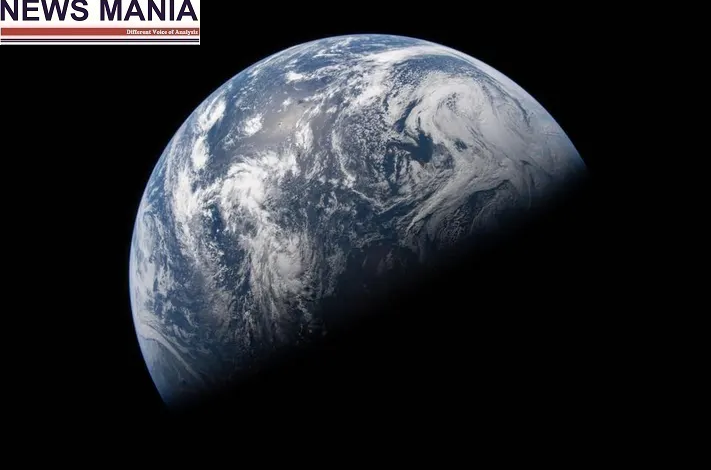
A new scientific study has found that climate change could be affecting the speed at which Earth rotates, adding another unexpected consequence to the growing list of impacts linked to global warming.
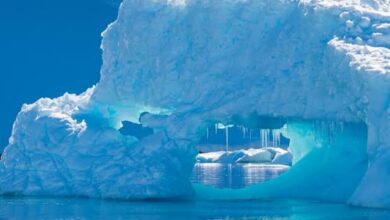
Researchers have discovered that the rapid melting of glaciers and polar ice sheets is redistributing the planet’s mass in a way that may be gradually slowing Earth’s spin. As ice accumulated near the poles melts, the resulting water flows into the oceans and spreads towards the equator. This shift in mass alters the planet’s moment of inertia, causing a slight reduction in its rotational speed.
Scientists compared the phenomenon to a figure skater who slows down by extending their arms outward while spinning. Although the effect is extremely small, experts say it is measurable using modern scientific instruments and advanced modelling techniques.
According to the study, the ongoing redistribution of water caused by climate change is increasing the length of a day by approximately 1.33 milliseconds per century. While this change is imperceptible in daily life, researchers noted that even minor variations in Earth’s rotation can have implications for technologies that rely on highly precise timekeeping, including satellite navigation systems, telecommunications and space missions.
To trace how Earth’s rotation has changed over time, the scientists examined fossil records of microscopic marine organisms known as benthic foraminifera. By combining this data with machine-learning methods, they reconstructed changes in day length spanning millions of years. Their findings indicate that the current rate of climate-driven slowing may be unprecedented over the past 3.6 million years.
Researchers emphasised that natural factors, particularly the Moon’s gravitational influence, have long affected Earth’s rotation. However, human-induced climate change is now emerging as another significant factor shaping the planet’s behaviour.