Putin Admits Fuel Shortages in Russia as Ukrainian Drone Attacks Disrupt Energy Infrastructure
News Mania Desk/ Piyal Chatterjee/29th June 2026

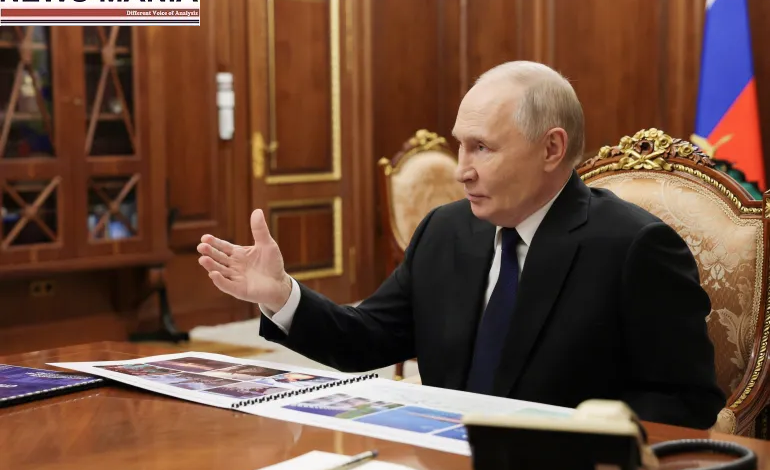
Russian President Vladimir Putin has acknowledged that parts of the country are experiencing fuel shortages, citing disruptions caused by sustained Ukrainian drone attacks on Russia’s energy infrastructure. The admission comes as Moscow grapples with the growing impact of long-range strikes targeting oil refineries, fuel depots and other strategic facilities amid the ongoing war in Ukraine.
Speaking during a government meeting, Putin said certain regions were facing shortages of fuel supplies and assured that authorities were taking immediate measures to stabilise the situation. He announced the formation of a special government task force to oversee fuel distribution, with priority being given to meeting the needs of the agricultural sector during the crucial harvest season.
According to Russian officials, the country currently has approximately 1.7 million metric tonnes of gasoline reserves, and domestic fuel production is expected to increase in July compared to the previous month. The government is also considering imposing a complete ban on diesel exports if necessary to ensure sufficient supplies for the domestic market. Authorities said the proposal remains under review and would be implemented only if supply conditions deteriorate further.
Ukraine has intensified its campaign of long-range drone strikes against Russian oil refineries, fuel storage facilities and other energy assets in recent months. Kyiv says the attacks are intended to weaken Russia’s military logistics and reduce revenues generated from its energy sector, which remains a key source of funding for the war effort. The repeated strikes have disrupted refining operations, damaged infrastructure and complicated fuel distribution across several Russian regions.
Despite the challenges posed by the attacks, Putin indicated that Russia would not alter its military objectives in Ukraine. Instead, he said the government would strengthen the protection of critical energy infrastructure while ensuring stable fuel supplies and prices for consumers and businesses.