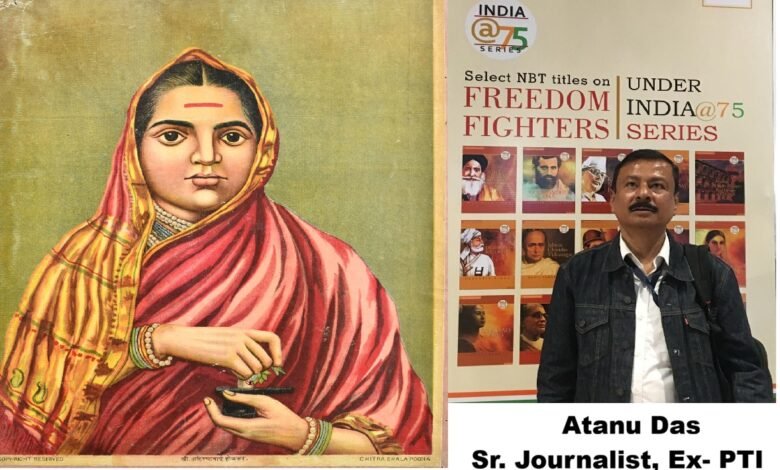
Ahilyabai Holkar was/ is regarded as one of the most visionary female rulers of India
By Atanu Das , Sr. Journalist, Ex- PTI / 29 June 2026

New Delhi : In 1772, a widow from a shepherd family in Maharashtra wrote a letter.
She warned the most powerful man in the Maratha Empire about the British.
Described their strategy with precision that reads like prophecy.
He ignored her.
30 years later — the Maratha Empire was gone.
Exactly the way she said it would happen.
—
Her name was Ahilyabai Holkar.
She governed Malwa from 1767 to 1795.
28 years. Zero successful invasions.
In the most politically violent century in Indian history.
—
Every morning — without exception — she held open court.
Any farmer. Any widow. Any merchant.
Walk in. No gatekeeper. No bribe. No appointment.
The queen herself. Listening. Acting.
For 28 years.
—
She rebuilt the Kashi Vishwanath temple in 1780.
111 years after Aurangzeb demolished it.
No emperor before her had dared.
She did it because it needed to exist.
—
She built temples at Kashi, Gaya, Somnath, Ayodhya, Mathura, Haridwar, Dwarka, Rameshwaram and dozens more.
Wells and rest houses so pilgrims wouldn’t die on the road.
Roads. Forts. Bridges.
A textile industry — the Maheshwari sari — still running 250 years after her death.
—
Her own people called her Punyashlok — One as Pure as the Sacred Chants.
Not a title conferred at a ceremony.
A name that rose spontaneously from the people who lived under her rule.
While she was still alive.
—
Sir John Malcolm — a British officer — wrote in 1823 that she was “one of the purest and most exemplary rulers that ever existed.”
A British officer said that.
About an Indian Hindu widow governing in the 18th century.
—
And yet most Indians today cannot name her.
That’s not an accident.
The entire British justification for colonizing India was that Indians could not govern themselves.
Ahilyabai Holkar’s existence demolished that argument completely.
So they buried her in curriculum silence.
Because if you knew she existed —
You’d ask one question they could never answer:
“If we could produce her without you — what exactly did you come here to civilize?”
Attention to every Indian who thinks British rule was a necessary chapter in our history.