
India’s TakeMe2Space to Launch First Orbital Computing Satellite on SpaceX Rocket
News Mania Desk/ Piyal Chatterjee/ 29th September 2026

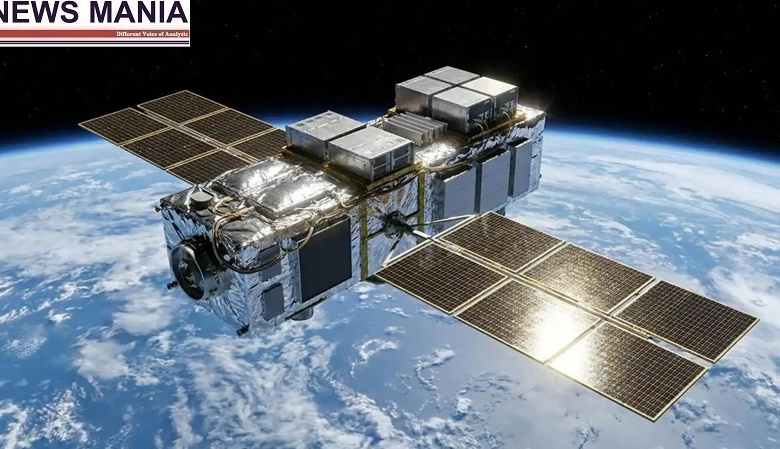
Hyderabad-based space startup TakeMe2Space is preparing to launch what it describes as India’s first orbital computing satellite, with its MOI-1A spacecraft scheduled to travel aboard a SpaceX rocket on October 1. The mission aims to demonstrate how satellite data can be processed directly in orbit instead of transmitting large volumes of raw information back to Earth.
MOI-1A will be deployed as part of SpaceX’s Transporter-18 rideshare mission. The satellite weighs about 14 kg and is equipped with Nvidia Orin NX processors capable of delivering up to 117 trillion operations per second. The spacecraft is designed to perform artificial intelligence-based computing in orbit, bringing data processing closer to where information is collected.
The system will allow customers to upload containerised AI models to the satellite. As MOI-1A passes over a designated region, these models can analyse Earth-observation data onboard. Instead of transmitting entire datasets to ground stations, the satellite can send the resulting analysis, potentially reducing the amount of information that needs to be downloaded and processed on Earth.
TakeMe2Space founder and CEO Ronak Samantray said the company has signed 23 customers for the mission. These include geographic information system companies and educational institutions, while potential applications extend to agriculture, mining, supply-chain management and insurance. US-based space-data analytics company Little Place Labs is also among the customers.
The upcoming launch follows an earlier technology-demonstration mission in late 2024, which tested the company’s ability to upload applications, conduct AI inference in orbit and download processed results. A subsequent MOI-1 satellite was lost after a third-stage failure during the PSLV-C62 mission in January 2026.
TakeMe2Space plans to expand the technology through larger, networked satellites from 2027. The company is also exploring orbital data storage for sectors such as financial services and defence. It designs and manufactures most of its satellite subsystems in India while sourcing components including processors, solar cells and propulsion systems from external suppliers.