

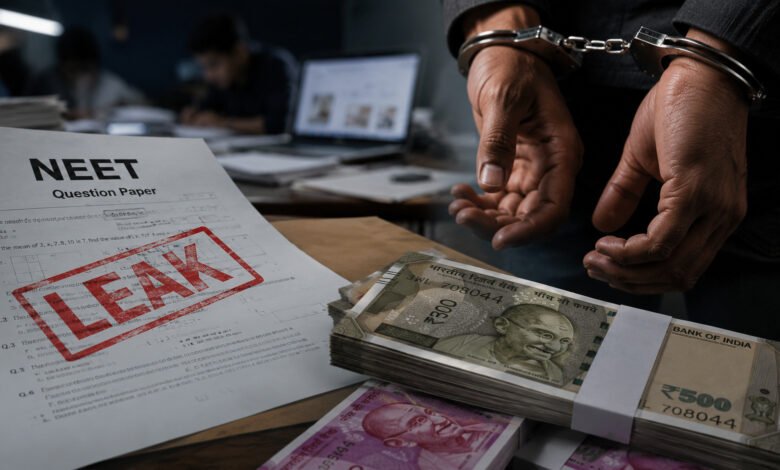
New Delhi: In a significant move to restore public confidence in India’s examination system, the Central Government on Monday introduced the Public Examinations (Prevention of Unfair Means) Amendment Bill, 2026 in the Lok Sabha, proposing far stricter punishments for those involved in paper leaks and examination fraud.
The legislation comes in the wake of nationwide protests over the NEET examination controversy, which culminated in the resignation of former Union Education Minister Dharmendra Pradhan. The Bill was introduced by Minister of State in the Prime Minister’s Office, Dr. Jitendra Singh, amid noisy Opposition protests demanding accountability over the police action against students during the July 20 Parliament march led by the Cockroach Janta Party (CJP).
Under the proposed amendments, individuals found guilty of leaking examination papers or using unfair means could face a minimum of five years and up to ten years of imprisonment, along with a fine of up to ₹50 lakh. For organised criminal syndicates involved in examination fraud, the punishment has been enhanced to a minimum of seven years in prison, with fines reaching ₹10 crore.
The Bill also mandates that investigations into paper leak cases must be completed within two months, while fast-track courts, to be established by States and Union Territories, will be required to conclude trials within three months of filing the charge sheet.
Additionally, the Centre will have the authority to constitute a Special Task Force to investigate major paper leak cases whenever required.
The proposed law significantly strengthens the existing anti-cheating legislation, which currently prescribes imprisonment ranging from three to five years and lower financial penalties.
Following the introduction of the Bill, Lok Sabha Speaker Om Birla invited Opposition members to oppose its introduction. However, despite calling on senior leaders from the Trinamool Congress, Congress, and RSP, no member spoke. The Speaker subsequently urged all political parties to participate in the debate, noting that they had consistently demanded a discussion on examination paper leaks.
The amendment is expected to be a key step in strengthening examination integrity, ensuring faster investigations, and imposing tougher penalties to deter organised cheating networks across the country.