Delimitation Debate Triggers Centre–South Political Tussle Over Representation
News Mania Desk/ Piyal Chatterjee/15th April 2026

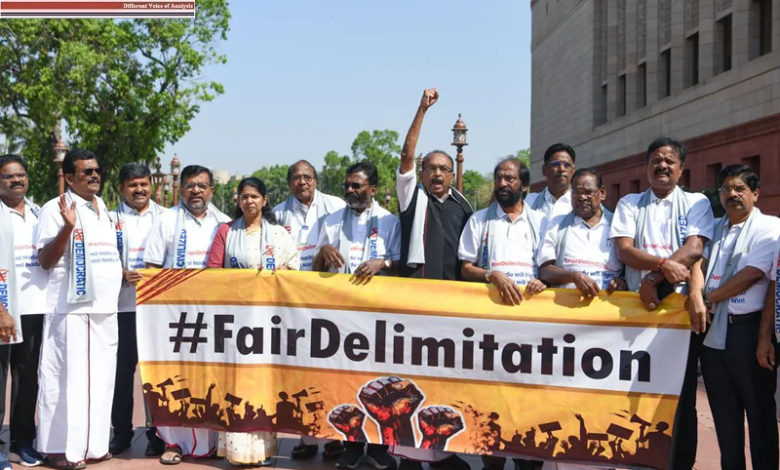
The proposed delimitation exercise—intended to redraw parliamentary constituencies and expand the strength of the Lok Sabha—has emerged as a major political flashpoint between the Union government and several southern states. The issue has reignited debates over representation, fairness, and the balance of power within India’s federal structure.
The Centre is expected to undertake delimitation after the next Census, with discussions suggesting a significant increase in the number of Lok Sabha seats from the current 543 to potentially around 850. The move is also seen as crucial for implementing the women’s reservation law ahead of the 2029 general elections. However, the proposal has raised serious concerns among southern states, which fear that the exercise could disproportionately benefit northern states with higher population growth.
At the heart of the controversy lies the principle of population-based representation. Since delimitation allocates seats according to population size, states such as Uttar Pradesh and Bihar are likely to gain a larger share of parliamentary seats due to their rising populations. In contrast, southern states like Tamil Nadu, Kerala, and Karnataka—where population growth has been effectively controlled—may see only marginal increases in representation.
Leaders from the South argue that such an approach effectively penalises states that have successfully implemented population control measures while rewarding those that have not. This has led to strong political reactions, with several chief ministers warning that the exercise could dilute the political voice and influence of their regions at the national level.
Tamil Nadu Chief Minister M K Stalin has been particularly vocal, calling for protests and cautioning that the interests of southern states must not be overlooked. Telangana Chief Minister Revanth Reddy has echoed similar concerns, urging southern leaders to unite against what he described as an unfair redistribution of political power. Leaders from Karnataka and Kerala have also expressed apprehension over the potential long-term implications of the move.
The debate has taken on a broader political dimension, with concerns that it could deepen the perceived divide between northern and southern India. Some leaders have proposed alternative models, such as factoring in economic contribution or adopting a hybrid formula, to ensure a more balanced outcome.
As the delimitation exercise looms, it is set to reshape India’s political landscape in a significant way. While the Centre maintains that the process is a constitutional necessity aimed at ensuring equal representation, critics argue that it risks undermining the principles of equity and federal balance. The coming months are likely to see intensified political negotiations as stakeholders seek to address one of the most contentious governance issues facing the country today.