Indore Declaration: BRICS Charts a New Course for Global Agriculture
News Mania Desk/ 13th June 2026

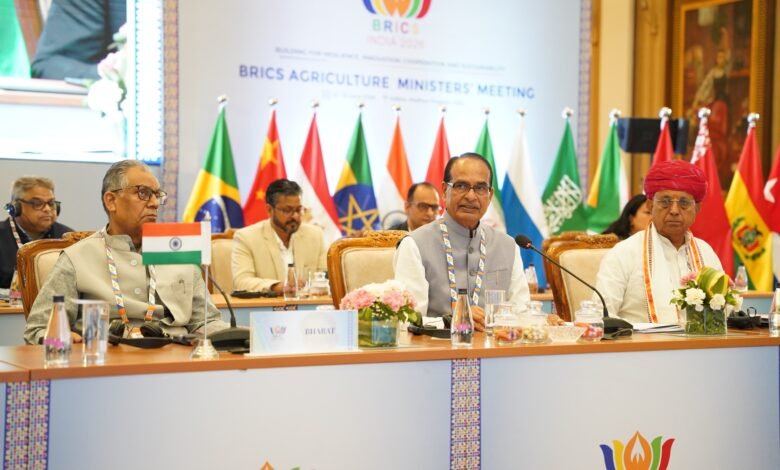
NEW DELHI / INDORE (June 13, 2026): The BRICS Agriculture Ministers’ and Officials’ meetings concluded successfully with the unanimous adoption of the historic ‘Indore Declaration’. Chaired by India’s Union Minister for Agriculture and Farmers’ Welfare, Shivraj Singh Chouhan, the declaration places smallholder farmers at the core of global food security, climate resilience, and digital transformation.
Minister Chouhan emphasized that BRICS nations—representing nearly half the world’s population and 42% of global agricultural land and grain production—hold a powerful collective voice. Under India’s 2026 BRICS Presidency, the summit addressed four key priorities: food security, enhanced agro-trade, regenerative farming, and technological innovation.
Four Landmark Institutional Initiatives
To translate the declaration into action, the BRICS nations agreed to establish four new global networks:
Network of Centres of Excellence on Agro-Ecology and Regenerative Agriculture: Aimed at joint research on natural and organic farming. India’s Indian Institute of Farming Systems Research, Modipuram, will play a pivotal role.
Network on Digital Agriculture: Focused on AI, geospatial tech, and digital public infrastructure. This network will be coordinated by IIT Delhi to bridge the gap between innovation and smallholders.
Global Forum on Farmers’ Rights in Seed Systems: Dedicated to protecting traditional knowledge, indigenous seed diversity, and farmers’ rights amid climate challenges.
BRICS AgriN (Agro Input, Genetic Resources, and Information Network): A platform to strengthen cooperation and information exchange regarding seeds, genetic resources, and agricultural inputs.
Key Highlights & Global Challenges
Lab-to-Land Model: The existing BRICS Agricultural Research Platform will be upgraded into a ‘Knowledge to Action Hub’ to ensure laboratory innovations directly reach farmers’ fields.
Climate and Carbon Credits: The leaders discussed strategies to counter El-Niño impacts, optimize carbon credit systems for eco-friendly farming, and mitigate post-harvest food loss.
Fertilizer Subsidies: Minister Chouhan highlighted that despite rising global raw material costs, the Indian government, under PM Narendra Modi, is fully absorbing the financial burden to provide affordable fertilizers (Urea at ₹266 and DAP at ₹1350 per bag) to support its farmers.
Inclusivity: The roadmap emphasizes empowering women, youth, and smallholders through Custom Hiring Centres (for renting drones and modern machinery) and supporting agri-startups.
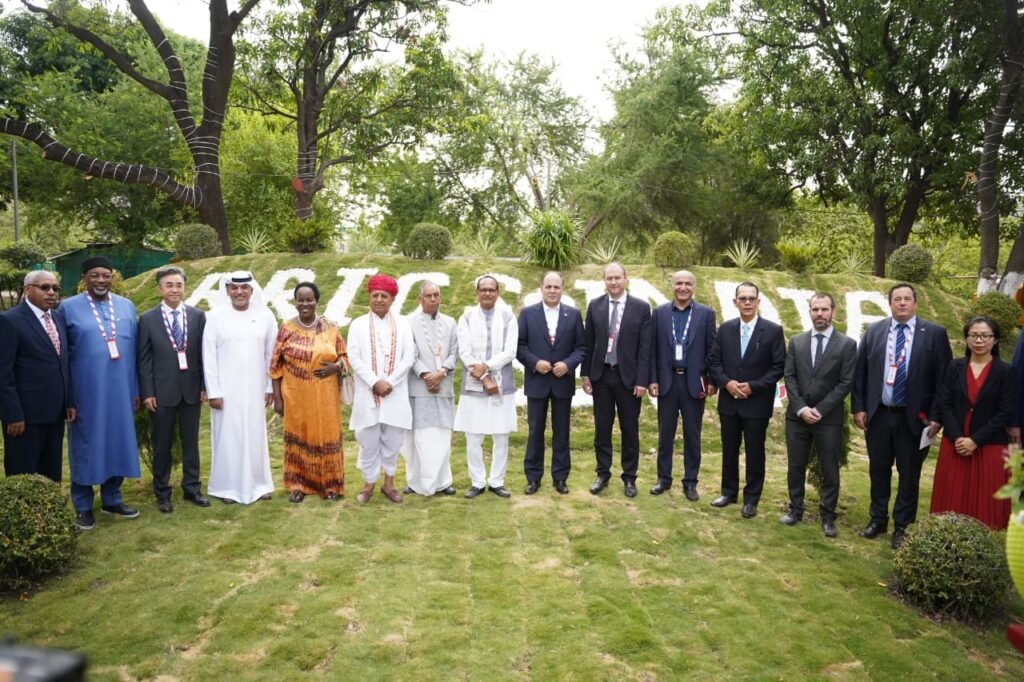
The event concluded with delegates planting trees to establish a ‘BRICS Vatika’ in Indore, symbolizing a shared, sustainable future.