
Women in Ancient Mesopotamia Held Diverse Roles Within a Patriarchal Society
News Mania Desk/ Piyal Chatterjee/ 16th April 2026

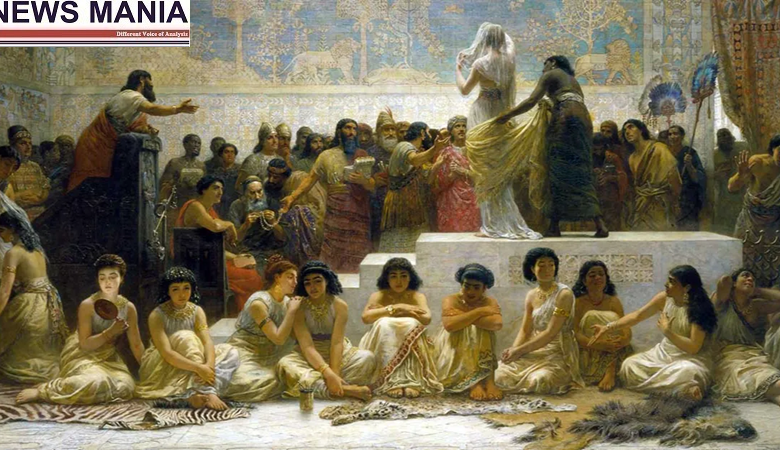
Women in Ancient Mesopotamia played significant social, economic, and religious roles despite living in a largely male-dominated system. Spanning major civilizations such as Sumer, Babylon, and Assyria, their status reflected a mix of legal rights and social restrictions.
Historical records indicate that women were recognised under formal legal systems like the Code of Hammurabi, which outlined their rights as well as limitations. While men generally held greater authority, women could own property, engage in trade, and participate in legal proceedings, suggesting a degree of independence within the framework of the time.
In domestic life, women were central to household management. Their responsibilities included raising children, supervising domestic workers, and maintaining family resources. Producing heirs, particularly male children, was considered crucial, reinforcing the importance of women within family structures. Social customs also allowed for alternative arrangements, such as the involvement of servants, in cases where heirs were not produced.
Women were also actively involved in the economy. They contributed significantly to industries like textile production, which formed a backbone of the Mesopotamian economy. In addition, women worked as brewers, bakers, merchants, and artisans, demonstrating their integral role in everyday economic activity. Brewing, in particular, was closely associated with women, who were responsible for both production and distribution.
Religious institutions offered another sphere of influence. Women served as priestesses and held respected positions within temples. Notably, Enheduanna emerged as a prominent figure, widely regarded as one of the earliest known named authors in history. The presence of powerful goddesses like Inanna further reflected the cultural significance attributed to women.
However, the experiences of women varied greatly depending on their social status. Elite women often enjoyed more privileges and autonomy, while those from lower classes or enslaved backgrounds faced stricter limitations. Over time, especially in later periods, societal norms imposed additional restrictions on women’s public roles and behaviour.