Women’s Reservation Act to Fulfil Long-Standing Vision and Shape Inclusive Future, Says PM Modi
News Mania Desk/ Piyal Chatterjee/15th April 2026

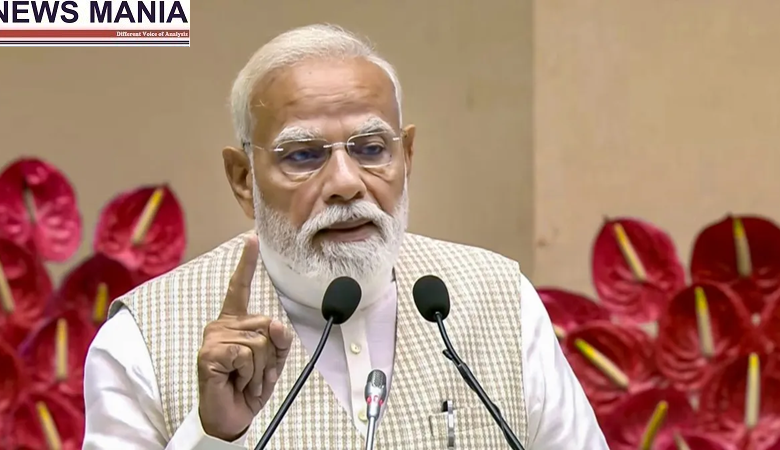
Prime Minister Narendra Modi has described the Women’s Reservation Act as a transformative milestone that will fulfil the aspirations of past generations while laying the foundation for a more inclusive and representative future. Emphasising its historic significance, he said the legislation reflects India’s enduring commitment to strengthening women’s participation in governance and public life.
The law, formally known as Nari Shakti Vandan Adhiniyam, seeks to reserve one-third of seats in the Lok Sabha and state legislative assemblies for women. The Prime Minister noted that the idea of political reservation for women has been under discussion for decades, with successive governments and leaders advocating for greater gender representation in lawmaking bodies. He said the passage of the Act marks the culmination of these efforts and honours the vision of those who worked towards this goal.
Highlighting the broader impact of the reform, Modi said the Act is not merely a legislative change but a catalyst for social transformation. Greater representation of women in decision-making roles, he argued, would bring diverse perspectives into governance and lead to more balanced policy outcomes. He added that empowering women politically would have far-reaching effects across sectors such as education, healthcare, and economic development.
The Prime Minister also reiterated his government’s focus on “women-led development,” asserting that India’s growth story is increasingly being shaped by the contributions of women across fields. He expressed confidence that the new law would create opportunities for women to take on leadership roles and actively participate in nation-building.
At the same time, Modi called for collective political support to ensure the effective implementation of the Act. He stressed that the reform transcends party lines and should be viewed as a shared national achievement rather than a partisan issue. According to him, cooperation among stakeholders will be crucial in translating the law’s intent into tangible outcomes.
However, the rollout of the legislation is linked to procedural requirements, including the completion of the next Census and a subsequent delimitation exercise to determine the allocation of seats. These prerequisites have led to discussions about the timeline for implementation, though the government remains optimistic about moving forward.
The Prime Minister also acknowledged the growing role of women in various sectors, noting that their increasing participation reflects India’s progress towards gender equality. He said the Act would further strengthen this trend by providing institutional backing to women’s representation in politics.