90% Turnout in Phase 2 of West Bengal Polls Reflects Strong Democratic Spirit
Ms.Bornali Biswas-Editor in Chief /Kolkata, April 29, 2026

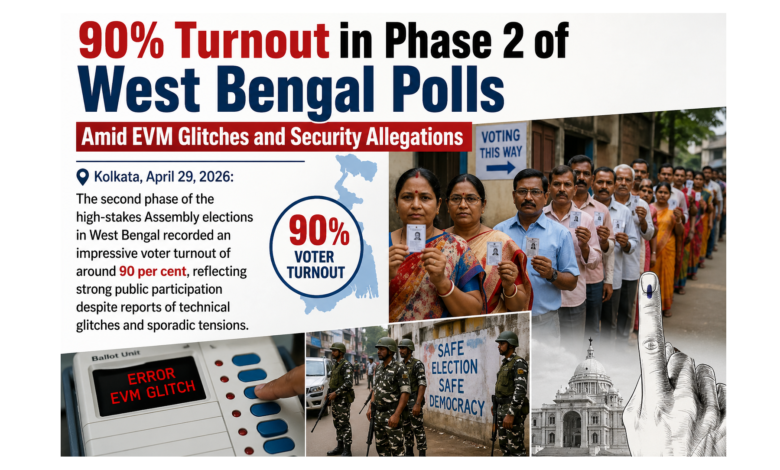
The second phase of the Assembly elections in West Bengal recorded an impressive voter turnout of nearly 90 per cent, underlining the state’s deep-rooted democratic participation despite facing challenges such as EVM glitches and allegations involving security forces.
From the early hours of the morning, long queues were visible outside polling booths across multiple districts. Voters from diverse backgrounds—young first-time voters, women, and senior citizens—came out in large numbers, braving the summer heat to cast their votes. The high turnout is being viewed as a strong endorsement of electoral awareness and civic responsibility among the people.
In several areas, arrangements were made to ensure smoother voting. Special queues for senior citizens and persons with disabilities, assistance booths, and deployment of volunteers helped facilitate participation. In cities like Kolkata, additional measures such as transportation support and medical aid by private institutions further strengthened inclusivity.
However, the day was not without its challenges. Reports of Electronic Voting Machine (EVM) malfunctions surfaced from certain polling stations, causing temporary disruptions. Officials from the Election Commission of India responded promptly by replacing faulty machines and deploying technical teams, ensuring that delays were minimised and voting resumed swiftly.
Political tensions also marked the day, with parties such as the All India Trinamool Congress and the Bharatiya Janata Party trading allegations over the conduct of polling and the role of central forces. Security personnel, including the Central Reserve Police Force, were deployed extensively across sensitive locations to maintain order and prevent escalation.
Despite sporadic reports of minor clashes and complaints, authorities maintained that the overall polling process remained largely under control. Quick response teams and control rooms monitored the situation closely, addressing grievances in real time and ensuring adherence to electoral guidelines.
One of the most notable aspects of this phase was the determination of voters. In several constituencies, elderly citizens were seen arriving with assistance, while families treated voting as a collective civic activity. This widespread participation highlighted the resilience of democratic processes even in the face of logistical and political challenges.
The Election Commission of India reiterated its commitment to conducting free and fair elections, assuring that all complaints and allegations would be thoroughly examined. The high turnout, coupled with improved monitoring and security arrangements, reflects an evolving electoral environment where participation remains strong and systems continue to adapt.
As West Bengal moves forward in the electoral process, Phase 2 stands as a testament to the enduring faith of its people in democracy—where challenges exist, but the collective will to vote remains stronger.