NASA Study Highlights Titan’s Vast Resource Potential for Future Space Exploration
News Mania Desk/ Piyal Chatterjee/ 17th June 2026

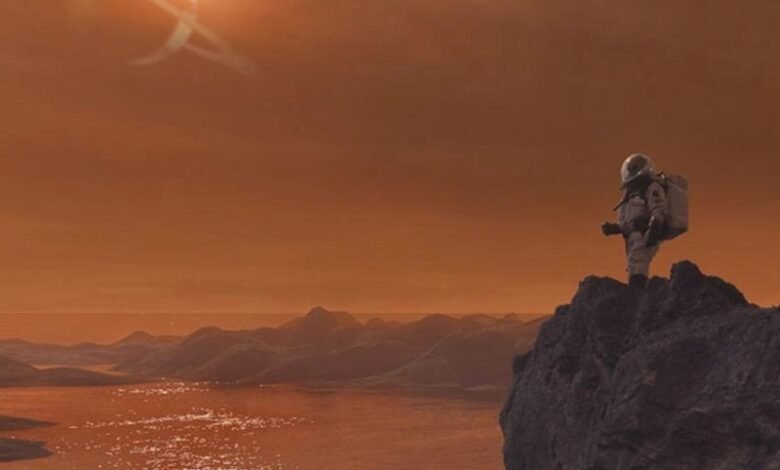
Saturn’s largest moon, Titan, may hold enormous reserves of valuable resources that could support future space missions and long-term human exploration, according to a NASA-backed study highlighted in recent reports. Scientists believe the icy moon contains significant quantities of hydrocarbons and water ice, making it one of the most resource-rich bodies in the Solar System.
Researchers have compared Titan’s abundance of methane and ethane to Earth’s largest natural gas reserves, earning it the nickname “the Persian Gulf of space.” These hydrocarbon deposits, found in the moon’s lakes and seas, could potentially serve as a source of energy for future explorers and space-based industries.
In addition to its hydrocarbon wealth, Titan is believed to possess vast quantities of frozen water. Scientists suggest that this water ice could be processed into drinking water, oxygen for life-support systems and even hydrogen-based rocket fuel, reducing the need to transport essential supplies from Earth.
Much of what is known about Titan comes from data collected by the Cassini-Huygens mission, which revealed the moon’s thick atmosphere, complex organic chemistry and unique landscape dominated by liquid methane and ethane bodies. These characteristics have made Titan a subject of growing interest among planetary scientists.
Despite its promising resources, Titan presents major challenges. Surface temperatures on the moon average around minus 179 degrees Celsius, and its location in the outer Solar System would make travel and communication difficult.
Nevertheless, scientists consider Titan a compelling target for future exploration. NASA’s upcoming Dragonfly mission, which will deploy a rotorcraft to study the moon’s surface and environment, is expected to provide new insights into Titan’s habitability and resource potential. The findings could play an important role in shaping humanity’s long-term ambitions beyond Earth.