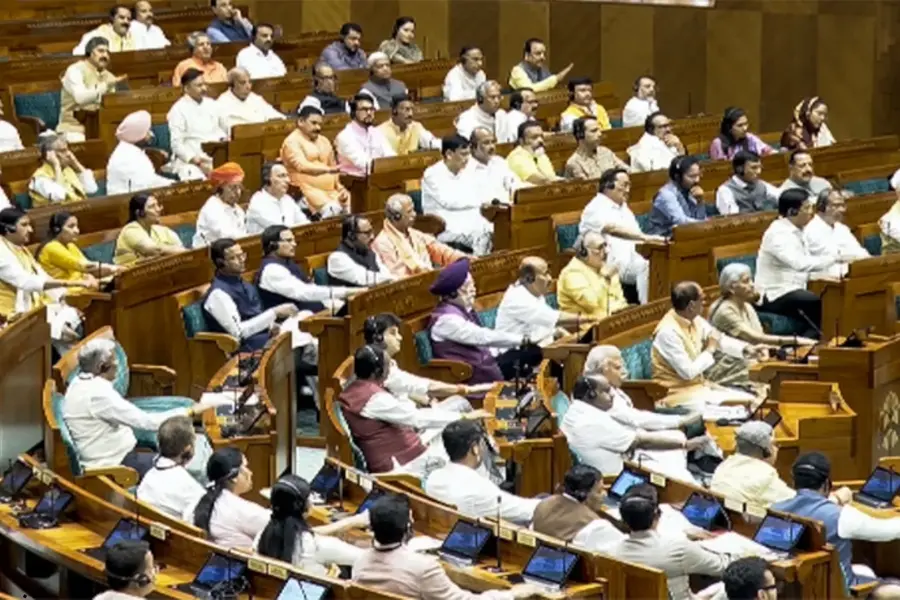

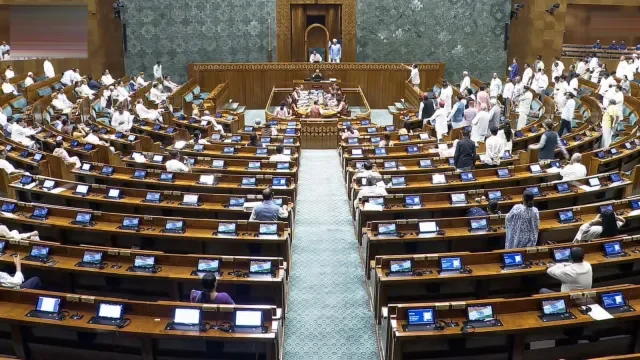
The Lok Sabha on Wednesday gave the Joint Parliamentary Committee (JPC) reviewing the proposed “One Nation, One Election” Bill another extension till the conclusion of the Winter Session, meaning it will not be discussed during the current Monsoon Session of Parliament.
In the Lok Sabha, committee chairman PP Chaudhary proposed a motion to extend the deadline for submitting the panel’s report to the first day of the final week of the Winter Session. The resolution was adopted by voice vote.
The Constitution (the 129th Amendment) Bill, 2024, which aims to provide a framework for concurrent elections to the Lok Sabha and state assemblies, is unlikely to proceed in Parliament prior to the Winter Session as a result of the ruling. The Winter Session of Parliament usually starts in late November and ends before Christmas. The 41-member JPC has been holding nationwide discussions on the viability and ramifications of synchronised elections with state governments, political leaders, civil society groups, educationists, and constitutional experts.
Chaudhary recently stated that the committee was attempting to develop a model that would be acceptable to all political parties and was investigating ways to make simultaneous elections possible by the general elections in 2029. The administration claims that the plan aims to minimise disturbance to governance, cut expenditures, and decrease election frequency. According to Chaudhary, holding frequent elections results in financial expenses, reduces administrative effectiveness, and takes teachers and other government workers away from their main responsibilities.
Additionally, he noted research that was provided to the high-level commission led by former President Ram Nath Kovind, which anticipated significant economic benefits from synchronised polling.The proposal’s proponents claim that holding elections simultaneously might save millions of working days over a five-year cycle, lessen the strain on schools that are commonly utilised as voting places, and reduce the deployment of workers on election duty.
Opposition parties have expressed strong objections to the proposal of synchronizing elections, arguing it could weaken state autonomy and favor larger national parties. Critics question the feasibility of a common electoral cycle in a parliamentary system where governments may not complete their terms.
Various opposition leaders are calling for broader consultations on constitutional and legal issues before any amendments. The Joint Parliamentary Committee (JPC) has gathered feedback from several states regarding implementation challenges. Although civil society largely supports the proposal, political consensus is still lacking. The JPC’s extended tenure
will focus on completing consultations and finalizing recommendations, with the government expected to wait for the report before further legislative action, potentially during the Winter Session.