Framing India: The Visual Legacy of Raghu Rai
News Mania Desk/ Piyal Chatterjee/ 27th April 2026

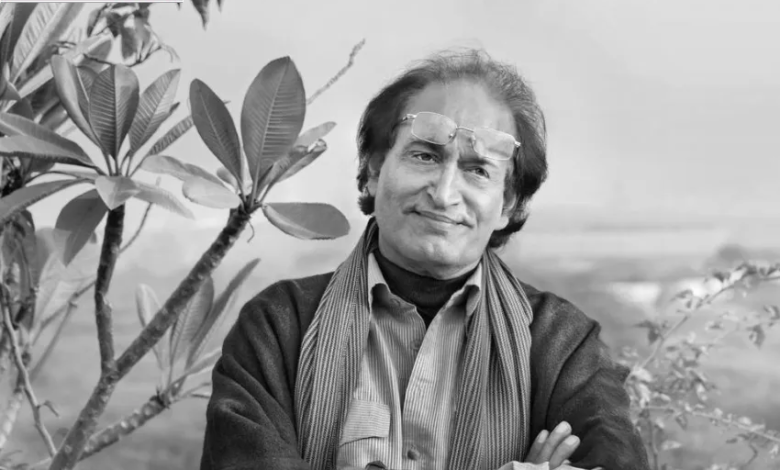
According to Raghu Rai, he would never be able to meditate without a camera. He has made multiple unsuccessful attempts. He only discovered a meditative condition behind the lens, when he transformed into a regular man led by intuition.
His images are straightforward but smart and insightful.In an interview with Doordarshan, he stated that it was about seeing in entirety, which included not only the physical but also emotion, feeling, and, above all, the spirit of the moment. Over the course of his six-decade career, his images remained mundane yet beautiful. Up until the final few weeks before his death on April 26, he continued to click.
Early Life and Career Beginnings
In the tiny Pakistani village of Jhhang, Raghu Rai was born in 1942. In 1965, he began taking pictures, and the following year, he joined the chief photographer for the Statesman newspaper. Henri Cartier-Bresson recommended Rai to join Magnum Photos in 1977 after being impressed by an exhibition of his photography in Paris in 1971.
In 1976, Rai quit The Statesman to take a job as picture editor for Sunday, a Calcutta-based weekly news magazine. After leaving in 1980, he worked for India as a picture editor, visualizer, and photographer. India’s top news magazine now, in its early years. He contributed groundbreaking photo essays on social, political, and cultural themes while working on special editions and designs from 1982 to 1991. Many of these pieces became the magazine’s talking points.
The renowned French photographer Henri Cartier-Bresson served as his tutor. In 1977, he suggested that Rai join Magnum Photos since he was so impressed with his work. Only the best photographers are invited to join Magnum, one of the most prominent photography organizations in the world.
Visual Record of Contemporary India
Many people refer to Rai’s photography as a “visual record” of contemporary India. Following one of the biggest industrial disasters in history—the Bhopal gas tragedy—he took striking pictures. He also took intimate, up-close pictures of famous people like Indira Gandhi and Mother Teresa at the same time. His books on photography were well-known. Raghu Rai’s India: Reflections in Color and Reflections in Black and White are two of his best-known pieces.
Spirituality and Creative Process
Being there was the source of the charm for him. Taking a photo was a struggle with his own ego, akin to a journey to transcend well-known tunes and produce something genuinely worthy of the occasion. Situations evolve, he said. Frames should, too.For Raghu Rai, spirituality and photography were closely related. It transcended vision and entered the metaphysical realm of the heartbeat, emotion, and energy. His capacity to fully immerse himself in the moment is remembered by those who worked closely with him.
“The first thing that caught my eye was Raghu’s intensity and tremendous focus — when he looked at you, he was always there,” said India Today Group Editorial Director Raj Chengappa, recalling the 1980s. “He wasn’t distracted, regardless of hierarchy or who you were.”
The Bhopal Disaster Context
The nighttime deadly gas leak from the Union Carbide chemical facility in Bhopal, India, occurred 40 years ago. However, the event, which took place in December 1984 and was thought to have resulted in over 300,000 deaths, continues to make headlines. This is partly because of the enormous scope of this notorious disaster, which caused thousands of people to die and suffer. The ongoing dispute over what caused the leak and who should be held responsible is another factor contributing to the disaster’s sustained coverage for more than 20 years.
Renowned Indian photographer Raghu Rai’s documentary photos of the gas leak victims have frequently served as rhetorical catalysts (stimuli for debate that inspire viewers to take action) to such disagreements throughout this period of deliberation. In fact, disaster photography has a formative role in “shaping what catastrophes and crises we pay attention to, what we care about, and ultimately what evaluations are attached to these conflicts,” as Susan Sontag contends in Regarding the Pain of Others (105). In this sense, visual rhetoric can be used as a kind of social activism in addition to presenting ideas to an audience. It is intended to engage the audience in a conversation that advances particular objectives.
Portraits of Indira Gandhi Mother Teresa and the Dalai Lama
His extensive documentation of Indira Gandhi is particularly striking. Rather than merely reinforcing her political authority, Rai captures the paradoxes that defined her persona. In several images, Gandhi is framed in contemplative solitude, often enveloped in shadow, suggesting the burden of leadership and an almost existential isolation. The interplay of light and composition in these photographs underscores both her resolve and vulnerability, rendering a complex portrait of power.
In contrast, Rai’s images of Mother Teresa are imbued with a quiet, unembellished reverence. He focuses on her gestures—her touch, her gaze, her proximity to those she served—eschewing grandiosity in favour of intimate realism. These photographs foreground compassion as lived experience rather than abstract virtue. Meanwhile, his portraits of the Dalai Lama radiate a disarming warmth and spiritual equanimity. Rai captures fleeting expressions—gentle smiles, moments of laughter—that evoke a sense of inner serenity and philosophical depth.
Through a lifetime devoted to observation and intuition, Raghu Rai transformed photography into a deeply reflective and almost spiritual practice. His work goes beyond documentation, offering a profound engagement with people, power, suffering, and serenity. Whether capturing the quiet intensity of Indira Gandhi, the compassion of Mother Teresa, or the calm wisdom of the Dalai Lama, Rai consistently revealed the human essence beneath public personas. His images endure not merely as records of moments, but as living reflections of emotion, spirit, and time—ensuring his legacy remains integral to the visual and cultural memory of contemporary India.