Fuel Conservation for National Stability: Why PM Modi’s Appeal Matters Amid the Global Energy Crisis
Ms.Bornali Biswas-Editor in Chief / 27th May 2026

The world is once again witnessing the dangerous consequences of geopolitical instability on global energy security. The latest report of the International Energy Agency (IEA) has warned of a widening oil deficit due to disruptions in maritime trade routes, especially the blockade-related tensions in the Strait of Hormuz. Since nearly one-fifth of the world’s oil supply passes through this narrow route, any conflict or disruption immediately affects fuel prices, transportation costs, and inflation across the globe. For a developing country like India, which imports more than 80 percent of its crude oil needs, the consequences can be severe.
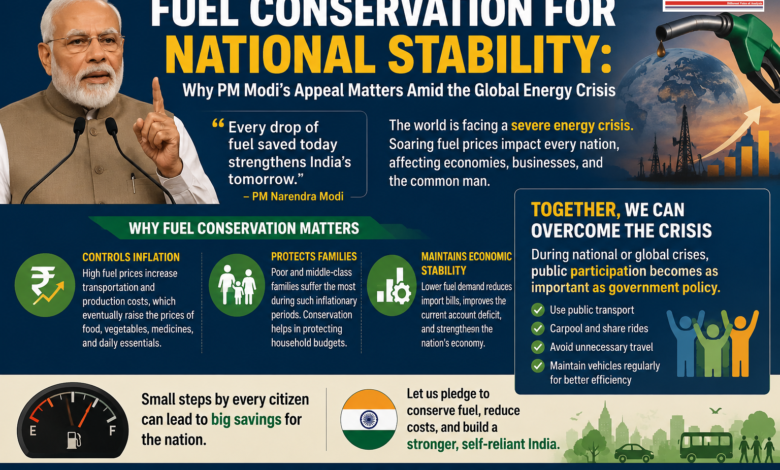
In this challenging situation, Prime Minister Narendra Modi has appealed to citizens to reduce unnecessary fuel consumption for one year. While some may see this as a symbolic request, such collective action can play a significant role in protecting India’s economy and reducing pressure on ordinary citizens.
The first and most immediate benefit of fuel conservation is the reduction of import expenses. Rising crude oil prices increase India’s import bill, weakening the rupee and putting pressure on foreign exchange reserves. If millions of Indians consciously reduce fuel usage by using public transport, carpooling, or limiting unnecessary travel, national fuel demand can decrease substantially. Even a small reduction in consumption at the individual level can collectively save billions of dollars for the country.
Secondly, controlled fuel demand helps stabilize inflation. High fuel prices increase transportation and production costs, which eventually raise the prices of food, vegetables, medicines, and daily essentials. Poor and middle-class families suffer the most during such inflationary periods. Therefore, conservation is not merely about saving petrol or diesel; it is about protecting household budgets and maintaining economic stability.
The Prime Minister’s appeal also carries an important psychological and patriotic message. During national or global crises, public participation becomes as important as government policy. India has historically shown that collective discipline and awareness can strengthen the nation during difficult times. Responsible fuel consumption can reduce panic buying and create a sense of shared responsibility.
Moreover, this crisis highlights the urgent need for India to accelerate investment in renewable energy, electric mobility, and domestic energy production. Dependence on imported oil makes the economy vulnerable to international conflicts beyond India’s control.
Ultimately, fuel conservation today is not a sacrifice but a strategic necessity. If citizens cooperate with awareness and responsibility, India can better withstand the global energy crunch while protecting both the economy and the common man from deeper financial distress.