India and UAE Sign Major Agreements During PM Modi’s Abu Dhabi Visit
News Mania Desks/ Piyal Chatterjee/ 15th May 2026

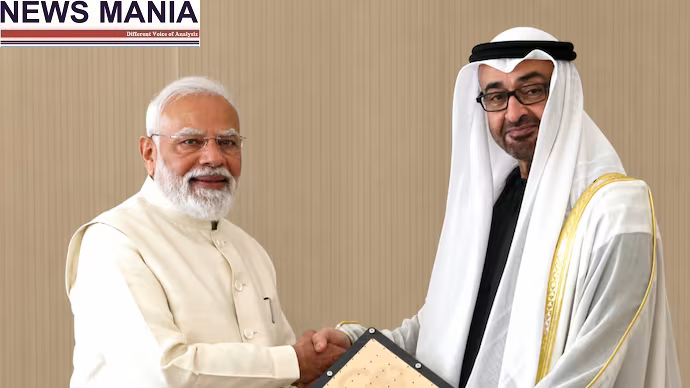
Prime Minister Narendra Modi strengthened India’s strategic partnership with the United Arab Emirates during his visit to Abu Dhabi on May 15, where both countries signed a series of important agreements focused on defence cooperation, energy security, infrastructure and investment. The visit highlighted the growing importance of India-UAE relations in regional diplomacy and economic development.
Strategic Defence Cooperation Framework
One of the key outcomes of the visit was the signing of a strategic defence cooperation agreement between India and the UAE. The framework aims to increase collaboration in military training, maritime security, cybersecurity and defence manufacturing. Both countries also agreed to improve coordination in defence technology and strengthen ties between their armed forces.
Officials described the agreement as a major step toward deepening long-term security cooperation. The defence partnership reflects India’s growing engagement with Gulf nations amid changing geopolitical conditions in West Asia and increasing focus on maritime security in the region.
Agreements on Energy Security
Energy cooperation emerged as another major focus during the discussions. India and the UAE signed agreements related to strategic petroleum reserves and long-term liquefied petroleum gas supply arrangements. The agreements are expected to help India strengthen its energy security and maintain a stable supply of fuel resources.
The petroleum reserve agreement will improve cooperation in crude oil storage and energy management, while the LPG supply deal aims to ensure reliable fuel availability for India’s growing domestic demand. With rising global energy uncertainty and fluctuating oil prices, India considers long-term partnerships with Gulf countries essential for economic stability. The two countries also discussed expanding cooperation in the broader petroleum and energy sectors, further strengthening an already important energy partnership.
UAE Announces Investment Commitments
A major highlight of the visit was the announcement of nearly USD 5 billion in investment commitments from UAE-based entities into India. The investments are expected to support sectors such as infrastructure, finance and logistics. Some of the investment plans are linked to Indian financial institutions, including RBL Bank and Samman Capital. Officials said the financial commitments would help support industrial growth, infrastructure modernization and employment generation across different sectors.
The UAE has emerged as one of India’s major economic partners in recent years, and the new investment announcements reflect increasing confidence in India’s long-term economic growth potential.
MoU for Ship Repair Cluster in Gujarat
India and the UAE also signed a memorandum of understanding for the development of a ship repair cluster at Vadinar in Gujarat. The project aims to strengthen India’s maritime infrastructure and improve ship repair and maintenance capabilities.
The proposed maritime hub is expected to boost coastal economic activity, create employment opportunities and improve logistics infrastructure. It also aligns with India’s larger strategy of promoting port-led development and strengthening maritime trade networks. Officials believe the project will enhance India’s position as a regional maritime services centre.
Focus on Regional Stability
During delegation-level talks with UAE President Mohamed bin Zayed Al Nahyan, Prime Minister Modi emphasized the importance of peace and stability in West Asia. He stated that India stands “shoulder-to-shoulder” with the UAE in supporting regional cooperation and security. Modi also stressed the importance of keeping the Strait of Hormuz secure and open for global trade and energy transportation, given its strategic role in international commerce. The agreements signed during the visit demonstrate the expanding scope of India-UAE relations, which now extend beyond trade into defence, energy, infrastructure and long-term strategic cooperation.