Israel–Lebanon Ceasefire Takes Effect Amid Fragile Calm and Lingering Uncertainty
News Mania Desk/ Piyal Chatterjee/16th April 2026

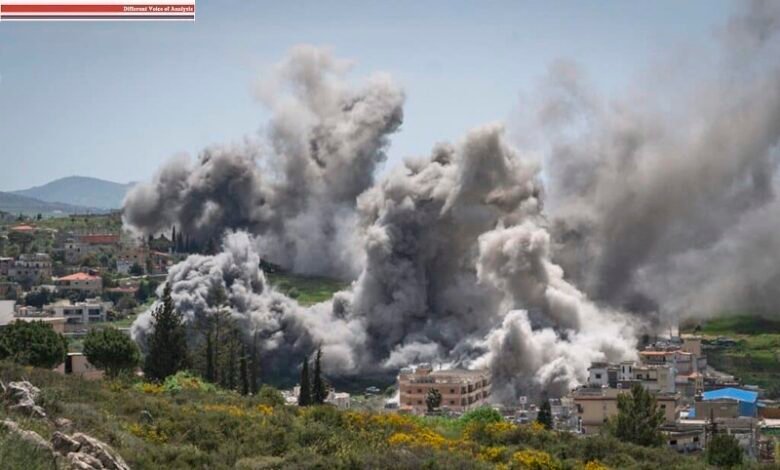
A temporary ceasefire between Israel and Lebanon came into force on April 17, 2026, offering a brief respite after weeks of intense cross-border fighting that has left thousands dead and displaced large sections of the population. The 10-day truce, brokered by the United States, is aimed at halting hostilities and creating space for further diplomatic negotiations in a region already strained by wider geopolitical tensions.
The agreement seeks to pause offensive military operations on both sides, particularly between Israeli forces and the Iran-backed militant group Hezbollah, which has been at the forefront of clashes along the border. Under the terms of the ceasefire, Lebanon’s government is expected to ensure that armed groups operating within its territory refrain from launching attacks, while Israel has committed to suspending large-scale offensives, though it retains the right to respond in self-defence.
Despite the announcement, several key issues remain unresolved, raising doubts about the durability of the truce. Notably, Hezbollah has not fully endorsed the agreement, and its stance continues to cast a shadow over the ceasefire’s effectiveness. Israel, for its part, has indicated that its forces will maintain positions in parts of southern Lebanon as a security measure, a move that has drawn concern from Lebanese authorities and local residents.
The conflict leading up to the ceasefire has been among the most severe in recent years, with widespread destruction reported across southern Lebanon. Civilian casualties have mounted, and infrastructure damage has forced thousands to flee their homes. While some displaced families have begun returning following the ceasefire’s implementation, many remain cautious, uncertain whether the lull in violence will hold.
Adding to the complexity is the broader regional dimension of the conflict. The tensions between Israel and Hezbollah are closely tied to the influence of Iran, which backs the militant group. This connection has heightened fears that any breakdown in the ceasefire could escalate into a wider confrontation involving multiple actors in the Middle East.
Early reports suggest that while the ceasefire has largely held in its initial hours, sporadic violations and exchanges of fire have already been recorded, underscoring the fragile nature of the agreement. Both sides have accused each other of minor breaches, though neither has signaled a full return to hostilities so far.
Diplomatic efforts are now expected to focus on extending the ceasefire beyond its initial 10-day period and addressing long-standing issues such as border security and the presence of armed groups. However, analysts caution that without concrete progress on these deeper concerns, the truce may prove to be only a temporary pause rather than a step toward lasting peace.
For now, the ceasefire has brought a measure of relief to civilians caught in the crossfire, but uncertainty continues to loom large. As negotiations unfold, the coming days will be critical in determining whether this fragile calm can be sustained or if the region risks slipping back into renewed conflict.