Central Forces and Strategy: Did Enhanced Security Redefine Election Management in West Bengal?
Ms.Bornali Biswas-Editor in Chief / 1st May 2026

Special Report from News Mania Desk
Kolkata | April 2026: Elections in West Bengal have historically been marked by high political stakes, intense competition, and, at times, incidents of electoral violence. Against this backdrop, the recent polling phases have drawn attention for relatively improved control measures, prompting discussions around whether a new model of election management is taking shape—one that emphasizes strong central oversight without invoking extreme constitutional provisions like President’s Rule.
A Shift in Approach: The conduct of elections in India is overseen by the Election Commission of India (ECI), which operates independently but often relies on central armed police forces for sensitive regions. In West Bengal, the scale of deployment has been significant, with forces such as the Central Reserve Police Force (CRPF) and Central Industrial Security Force (CISF) playing a key role in maintaining law and order.
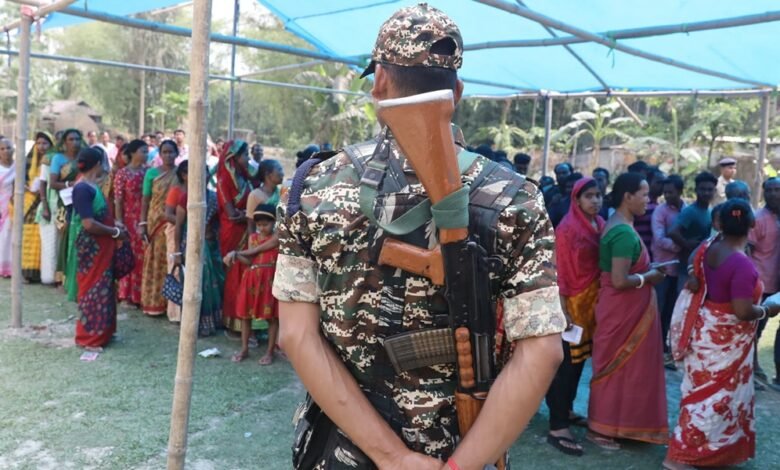
Unlike earlier electoral cycles where state police were more prominently involved, recent elections saw a greater reliance on central forces, especially in “sensitive” and “hyper-sensitive” booths. This shift was designed to ensure neutrality and build voter confidence.
Key Strategies Implemented: Several operational strategies appear to have contributed to improved management:
- Extensive Central Force Deployment: Thousands of companies of central forces were stationed across districts, with higher concentration in urban and politically sensitive areas like Kolkata.
- Area Domination and Route Marches: Security personnel conducted regular patrols in vulnerable localities ahead of polling day to deter intimidation and reassure voters.
- Micro-Level Booth Monitoring: Critical polling stations were placed under close surveillance, sometimes with webcasting and live monitoring.
- Strict Enforcement of Polling Protocols: Restrictions on carrying mobile phones and electronic devices inside booths, while inconvenient for some voters, were aimed at preventing malpractice.
- Quick Response Systems: Control rooms and rapid response teams were activated to address complaints in real time.
Central Government’s Role: While the ECI remains the constitutional authority, the role of the Union government—led by Narendra Modi—was significant in ensuring the availability and movement of central forces across the state. The coordination between central agencies and election authorities was critical in executing such a large-scale deployment without imposing President’s Rule.
Ground-Level Impact: Reports from several constituencies indicated:
- High voter turnout, reflecting confidence among citizens
- Reduced reports of booth capturing compared to past elections
- Greater participation of women and senior citizens
However, it is equally important to note that political parties, including the ruling All India Trinamool Congress and opposition Bharatiya Janata Party, have raised mutual allegations regarding bias, intimidation, and the role of security forces. These competing narratives highlight that while security may have improved in some areas, perceptions of fairness remain politically contested.
Challenges and Criticism: Despite improvements, concerns persist:
- Allegations of overreach or bias by central forces
- Logistical issues at polling booths, including queue management
- Voter dissatisfaction over certain restrictions
Such criticisms underline the complexity of managing elections in a politically charged environment.
A Model for the Future? The West Bengal experience suggests that strong, neutral security deployment combined with technological monitoring can significantly enhance electoral management. However, sustaining this model requires:
- Continued trust in the Election Commission of India
- Transparency in deployment and operations
- Cooperation between state and central agencies
While it may be premature to declare a complete transformation, the recent elections in West Bengal demonstrate that robust planning, central force deployment, and coordinated strategy can help reduce electoral disruptions without resorting to extreme constitutional measures.The true success of any election, however, lies not only in the absence of violence but in the confidence of every voter that their voice has been freely and fairly recorded.
92.1% Turnout in Phase 2 of West Bengal Polls Amid EVM Glitches and Security Allegations
The second phase of the high-stakes Assembly elections in West Bengal recorded an impressive voter turnout of around 92.1 per cent, reflecting strong public participation despite reports of technical glitches and sporadic tensions.
High Participation Despite Challenges: Long queues were seen across polling booths from early morning, with voters braving heat and logistical hurdles to exercise their franchise. Election officials noted that the turnout was among the highest in recent electoral cycles, underscoring heightened political engagement.
EVM Glitches Reported: Several constituencies reported issues related to Electronic Voting Machines (EVMs), leading to temporary disruptions in voting at some booths. Officials from the Election Commission of India (ECI) stated that technical teams were deployed promptly, and faulty machines were replaced to ensure minimal delay in the polling process.
Allegations and Counter-Allegations: The polling day was also marked by political tensions, with parties trading allegations:
- Leaders from the All India Trinamool Congress accused central forces of intimidation and bias.
- The Bharatiya Janata Party, in turn, alleged attempts at voter suppression and irregularities by local elements.
Security forces, including the Central Reserve Police Force (CRPF), were deployed extensively across sensitive areas to maintain law and order.
Clashes and Localised Incidents: Reports of minor clashes, assault allegations, and poll irregularities emerged from multiple districts. While most incidents were contained quickly, they highlighted the continued volatility in certain pockets.Authorities maintained that overall polling remained largely peaceful, with swift intervention by security personnel preventing escalation.
EC Monitoring and Response: The Election Commission of India kept close watch on developments through control rooms and observers on the ground. Complaints were logged and addressed in real time, with assurances that all allegations would be investigated.
Despite technical issues and political friction, the high turnout signals robust democratic participation in West Bengal. The focus now shifts to subsequent phases and the eventual counting of votes, as the state remains at the centre of intense political contestation.