
Are Humans The Only Species That Kiss? Evolutionary Scientists Point To Similar Behaviour Across Animal Kingdom
News Mania Desk/ Piyal Chatterjee/8th May 2026

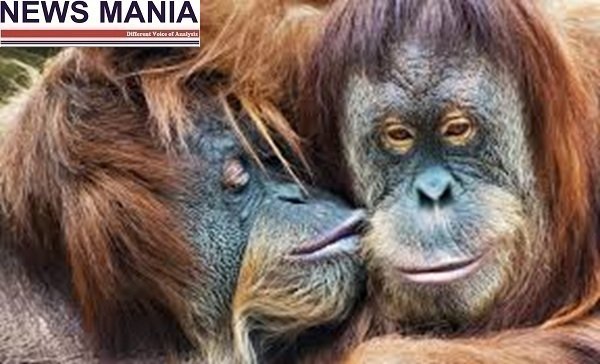
Kissing is often considered one of the most uniquely human expressions of affection and intimacy, but scientists say humans may not be the only species to display behaviours resembling kissing. A recent discussion by evolutionary biologists has highlighted how several animals engage in forms of mouth or facial contact that serve social, emotional and bonding purposes similar to those seen in human relationships.
Researchers studying animal behaviour and human evolution believe kissing may have developed from ancient biological and social behaviours linked to caregiving, grooming and communication. One of the most widely discussed theories suggests that human kissing evolved from “mouth-to-mouth feeding,” a practice still observed among certain bird species and primates. In this behaviour, parents transfer food directly to offspring through the mouth, helping strengthen bonds and ensure survival.
Scientists argue that over time, such actions may have gradually evolved into gestures associated with trust, intimacy and emotional connection in humans. Although romantic kissing today carries cultural and emotional meanings, experts say its evolutionary roots may lie in far older survival-based social behaviours.
Among animals, bonobos and chimpanzees are often cited as species displaying actions closest to human kissing. Bonobos, in particular, are known for using mouth contact and affectionate physical interaction to maintain social harmony within groups. Researchers say bonobos frequently use these gestures to reduce conflict, build alliances and reinforce emotional ties with one another.
Chimpanzees have also been observed engaging in lip-to-lip contact after fights or stressful situations. Evolutionary biologists believe these actions help restore trust and social stability among members of the group. While scientists caution against directly comparing animal behaviour to human romance, they note that the emotional and social functions behind these gestures can be remarkably similar.
Bird species also display bonding behaviours that resemble kissing. Parrots, pigeons and several other birds often touch beaks during courtship or pair bonding rituals. Some species use beak contact as a sign of affection or cooperation between mates. Researchers believe these actions play an important role in maintaining long-term social and reproductive partnerships.
Marine mammals and large land animals have also demonstrated comparable forms of affectionate interaction. Dolphins have been observed rubbing snouts and engaging in close facial contact, while elephants often use their trunks to touch faces and mouths in what scientists interpret as signs of social bonding and emotional communication.
At the biological level, researchers say kissing may also help humans subconsciously evaluate compatibility. Close facial contact can provide information about smell, hormones and overall health, potentially influencing attraction and mate selection. Scientists believe these sensory signals may have contributed to the behaviour’s evolutionary survival.
While human beings may have transformed kissing into a deeply emotional and symbolic gesture, researchers conclude that its basic foundations are rooted in broader evolutionary patterns shared across many social species. The findings suggest that affectionate mouth or facial contact is not exclusively human, but part of a larger system of bonding and communication found throughout the animal kingdom.