ALMA Detects Star-Forming Gas in Ancient Galaxies, Offering New Insights Into Cosmic Origins
News Mania Desk/ Piyal Chatterjee/ 16th June 2026

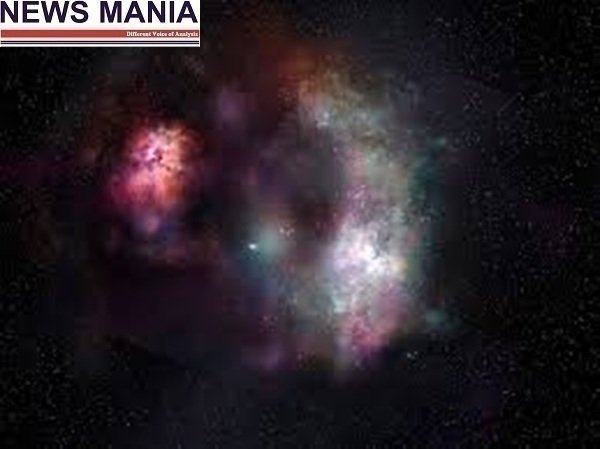
Astronomers have achieved a major breakthrough in the study of the early universe by directly detecting the gas responsible for star formation in some of the oldest known galaxies. Using the Atacama Large Millimeter/submillimeter Array (ALMA), researchers have, for the first time, identified the raw material that fuelled the birth of stars in galaxies that existed less than a billion years after the Big Bang.
The international team focused on four young galaxies dating back approximately 700 million to 800 million years after the universe came into existence. By observing a specific signal known as the oxygen [O I] 145-micrometre emission line, scientists were able to trace neutral gas reservoirs—the essential ingredient required for star formation.
Until now, astronomers largely depended on indirect methods to estimate the presence of such gas in distant galaxies. The new observations provide a more direct and reliable approach, allowing researchers to better understand the conditions under which the earliest generations of stars formed.
The findings were further strengthened by combining ALMA’s observations with data obtained from the James Webb Space Telescope. This collaboration enabled scientists to investigate the chemical makeup and physical properties of the galaxies in unprecedented detail.
Researchers also examined emissions linked to ionised gas and found them to be weak or absent, suggesting that the detected signals primarily originated from neutral gas associated with active star-forming regions.
Scientists believe the discovery marks an important step towards understanding how early galaxies evolved and transformed simple cosmic ingredients into stars. The study not only sheds light on a crucial phase of the universe’s history but also opens new avenues for exploring the processes that shaped the formation and evolution of galaxies over billions of years.