US Airstrikes on Iran Oil Facility Escalate Tensions; India Gets Temporary Relief via Hormuz Passage
News Mania Desk/ Piyal Chatterjee/16th April 2026

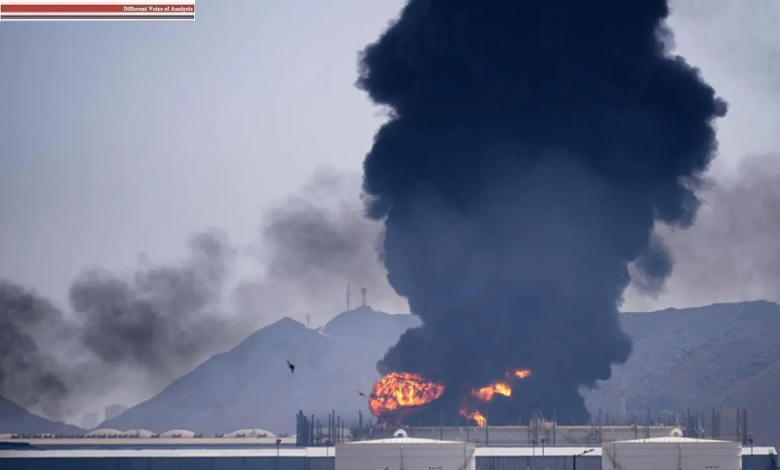
The conflict in West Asia has deepened significantly after the United States launched airstrikes on Iran’s vital oil export hub at Kharg Island, marking a major escalation in the ongoing confrontation involving Iran and Israel. The strikes targeted key infrastructure linked to Iran’s oil shipments, intensifying fears of a wider regional crisis and disrupting already fragile global energy markets.
Kharg Island plays a crucial role in Iran’s oil exports, handling a substantial portion of the country’s crude shipments. The attack has therefore raised serious concerns about supply disruptions, pushing oil markets into a phase of heightened volatility. Analysts warn that prolonged instability could have far-reaching consequences for global energy prices, particularly as the region remains a central hub for oil production and transportation.
Amid rising tensions, there was a partial reprieve for India as Iran permitted the safe passage of two LPG tankers destined for Indian ports through the strategically critical Strait of Hormuz. This development comes as a relief for India, which depends heavily on energy imports routed through the narrow maritime corridor.
The Strait of Hormuz is one of the world’s most important oil transit routes, facilitating a significant share of global petroleum trade. Any disruption in this passage has the potential to send shockwaves across international markets, affecting fuel prices and economic stability worldwide. India’s continued access to shipments through this route is therefore seen as vital in ensuring short-term energy security.
Despite the temporary easing of concerns for India, the broader geopolitical situation remains tense. The escalation following the US strikes has added a new layer of uncertainty, with fears that further retaliatory actions could lead to a wider conflict involving multiple regional and global powers.
Experts suggest that while diplomatic channels remain open, the situation on the ground is evolving rapidly, leaving little room for immediate de-escalation. The developments have not only heightened security concerns in the region but also underscored the vulnerability of global supply chains tied to West Asian stability. As the conflict continues, countries dependent on energy imports, including India, are closely monitoring the situation, preparing for potential disruptions while hoping for a diplomatic resolution to prevent further escalation.